

Middle Tier Portfolio
-
![Four young children sitting on the floor, wearing school uniforms, participating in a classroom activity.]()
Department of Basic Education
SOUTH AFRICA
Behaviors & Incentives: how and why Subject Advisors (SAs) change their instructional support practices
-
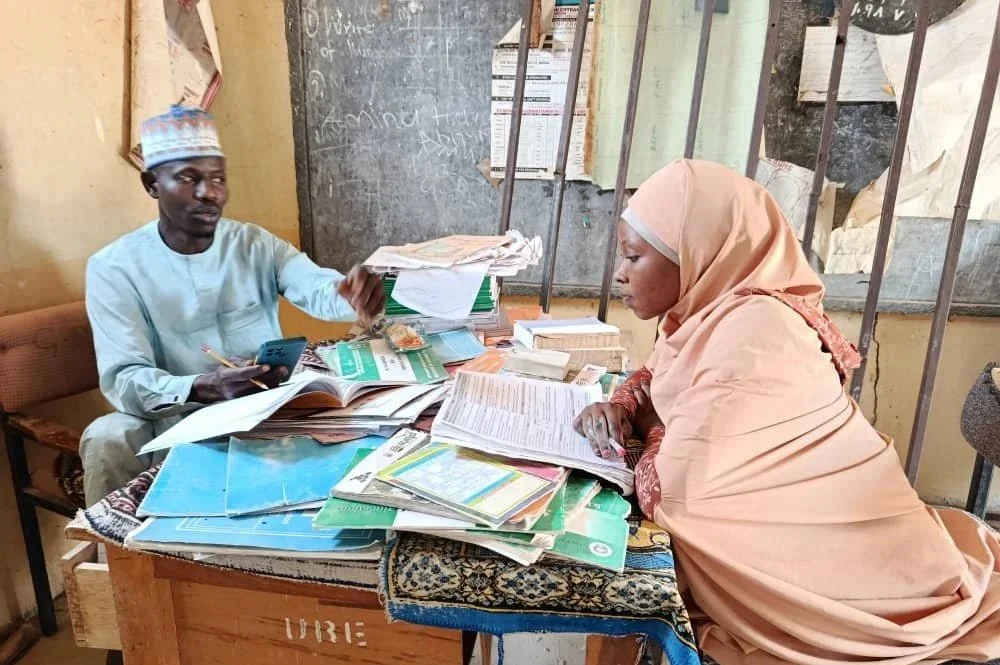
![A man and a woman sit at a cluttered desk with various papers and books, in a room with a blackboard in the background.]()
FHI 360
NIGERIA
Behaviors & Incentives: How Can School Support Officers (SSOs) Deliver More Effective Coaching?
-
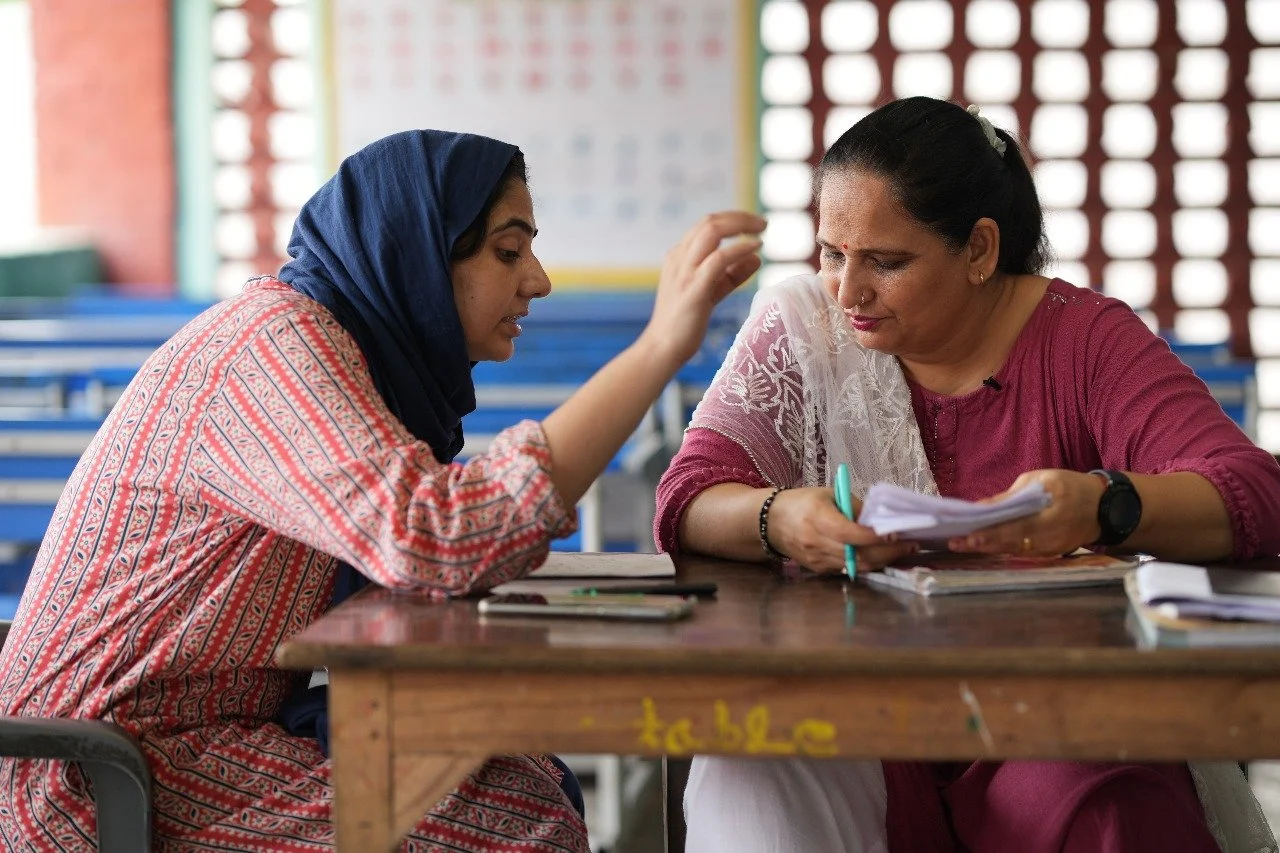
![Two women sitting at a desk, one wearing a blue headscarf and the other in a pink outfit, engaged in a discussion with papers and a pen in front of them.]()
Language & Learning Foundation
INDIA
Behaviors & Incentives: How Can Block Education Officers (BEOs) Strengthen Academic Leadership Without Adding to Their Workload?
-
![Two women smiling and holding up index cards with the numbers 4 and 98 in a large room with chairs and other people seated in the background.]()
Meerkat Learning
NAMIBIA
Data: How Can Middle-Tier Officials Use Data to Strengthen Teacher Coaching?
-
![Children in school uniforms playing a game on the ground in a classroom or community space.]()
VVOB
ZAMBIA
Coaching: How Can Mentoring Be Strengthened to Support TaRL Implementation?



SOUTH AFRICA
Department of Basic Education
Behaviors & Incentives: how and why Subject Advisors (SAs) change their instructional support practices
Experimental evidence from South Africa’s Early Grade Reading Study highlights the effectiveness of on-site coaching for improving literacy, but scaling this model is constrained by costs and limited coach availability. Leveraging district-level subject advisors could offer a more sustainable approach, particularly as the FLOAT programme expands structured learning support across three provinces. Progress is also hindered by limited comparable data on early-grade outcomes, though newly developed early-grade reading assessment tools and a nationwide subject advisor training in 2026 present an opportunity to strengthen advisors’ capacity and better support schools in improving foundational literacy.
Research Focus
Investigating how and why Subject Advisors (SAs) change their instructional support practices in response to the rollout of the two national interventions: the FLOAT programme and the EGRA training. This will include questions around:
How SAs typically support schools and teachers;
Whether and how their practices change following participation in FLOAT and/or EGRA training;
Which experiences (e.g. training), resources (e.g. tools and guides), and system-level conditions (e.g. norms, policies) enable or constrain effective SA support.

“Success will be producing rich insights into the experiences of subject advisors and how they can effectively support early-grade teaching. Our findings will inform scalable strategies for improving instructional support at the mid-tier, and influence programming nationally—ultimately contributing to stronger learning outcomes in South Africa and similar education systems.”

Stephen Taylor
Director of Research, Monitoring and Evaluation
South African Department of Basic Education
NIGERIA
FHI 360
Behaviors & Incentives: How Can School Support Officers (SSOs) Deliver More Effective Coaching?
PLANE, a seven-year FCDO-funded programme, is strengthening Nigeria’s education system and improving foundational skills in three northern states. School Support Officers (SSOs) are central to this effort, serving as a key link between schools and middle tier education authorities. However, their ability to offer consistent instructional coaching to teachers is often constrained by heavy workloads, multiple administrative responsibilities, and limited opportunities for specialized training. As a result, school visits, when they happen, can sometimes focus more on monitoring than on developmental feedback.
To address these challenges, PLANE is piloting a supplementary school-based coaching model—led by peer or head-teacher coaches—that can expand access to coaching while easing SSO burdens. However, how SSOs should connect to and support this model remains unresolved.
This research will test how to make the SSO role more effective by exploring:
Role (re)definition: How should SSOs connect with school-based coaching? What kinds of support or feedback loops should they provide?
Feasibility: How can SSO workloads be streamlined to make their roles—including stewardship of school-based coaching—practical and sustainable?
Under the Middle Tier grant, FHI 360 will work closely with stakeholders to pilot refined models of SSO roles. Through interviews, focus groups, and observations, we will examine how SSOs engage with school actors and experience different coaching models.
If SSOs receive clearer roles, lighter and more strategic workloads, and a feasible approach to supporting high-quality coaching, then professional development for teachers will improve, leading to better classroom practice and stronger foundational literacy and numeracy outcomes for students.

“The government welcomes the opportunity to collaborate on the initiative to improve the role and support SSOs (School Support Officers) provide to schools, contributing to effective teaching and better student outcomes in Kaduna South.”

Mikaila Isah Gubuchi
Education Secretary
Kadua South Local Government Education Authority
INDIA
Language & Learning Foundation
Behaviors & Incentives: Strengthening the Instructional Leadership Role of Block Education Officers (BEOs) for Foundational Learning While Balancing Existing Workload
Language and Learning Foundation (LLF) is a system-focused, impact-driven non-profit working at scale to improve Foundational Literacy and Numeracy (FLN) outcomes for children in the early years across India.
Block Education Officers (BEOs), key middle tier leaders, have the potential to drive classroom improvements at scale but currently spend less than 5% of their time on academic leadership due to heavy administrative demands. While some initiatives have engaged BEOs in planning and infrastructure, their role in supporting teaching and learning remains limited.
This research explores:
To what extent does structured support help BEOs shift their focus and time allocation toward instructional leadership?
Which adaptations of existing government-mandated tools are most effective in enabling this shift?
How do enabling conditions at district and state levels influence the uptake and sustainability of instructional leadership practices?
We will combine structured observations, surveys, interviews, shadowing, and focus groups to capture BEOs’ day-to-day practices and school-level impacts. Case studies will highlight individual change journeys, alongside an A/B test which will assess which inputs most effectively improve instructional leadership.
By shifting Mid-Tier practice, we aim to show how empowered BEOs can guide teachers more effectively, strengthening classroom instruction and improving foundational literacy and numeracy for students.

“We recognise that the findings from this study will be valuable in scaling high-impact instructional practices across districts and will contribute to evidence-informed educational leadership strategies within the state. We look forward to working closely with LLF on this important initiative, and to future collaborations that further strengthen FLN outcomes in Uttar Pradesh.”
Bharti Tripathi
Office of the Basic Shiksha Adhikari, Fatehpur, UP
NAMIBIA
Meerkat Learning
Data: How Can Middle-Tier Officials Use Data to Strengthen Teacher Coaching?
Meerkat Learning supports Namibia’s rollout of Teaching at the Right Level, which depends on frequent, responsive data use. However, middle-tier officials lack the training, coordination, and tools to translate school-level data into actionable support for teachers. ICT staff have technical skills but are rarely engaged in making data accessible to school support officers, leaving a disconnect that limits timely, targeted coaching. As a result, development partners fill the gap, raising costs and reducing sustainability.
This research explores:
Co-creating and evaluating a strategy to strengthen teacher coaching by improving data use and ICT integration at the middle tier. It will involve co-designing and disseminating visualized data reports (including photos, voicenotes, and videos) to improve how data is used in teacher coaching. The goal is to strengthen middle-tier data use, not just for reporting, but to drive real instructional change. The team will proceed in three stages:
First, improving the accuracy and timeliness of foundational learning data collection through training and coordination
Second, testing whether co-designed visual reports enhance coaching quality and decision-making; and
Third, refining and re-testing these tools to maximize their impact on teacher coaching and student learning outcomes.

“A key strength of our partnership is our data-sharing and joint monitoring culture. We are enthusiastic about the proposed implementation research. The A/B tet exploring how visual data can improve coaching and learning outcomes aligns with our priorities and can strengthen teacher support and engage school leaders and education officers.”
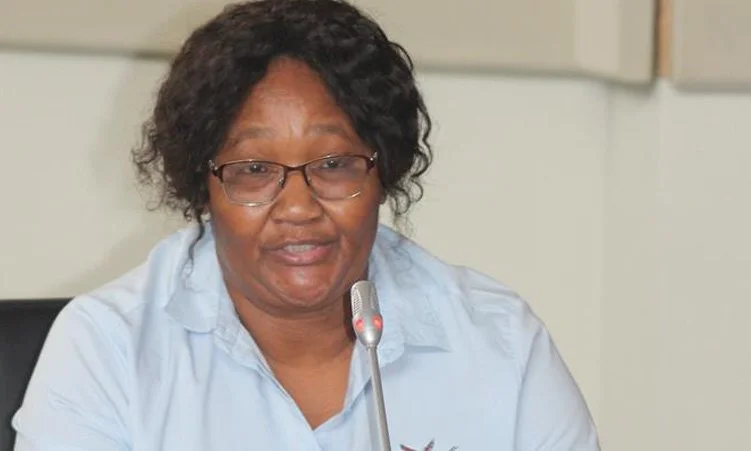
Ms E. J. Stephanus
Regional Director, Erongo Regional Council
ZAMBIA
VVOB
Coaching: How Can Mentoring Be Strengthened to Support TaRL Implementation?
Zambia’s Catch Up programme, the national remedial education initiative based on Teaching at the Right Level (TaRL), struggles with limited frequency and effectiveness of mentoring, particularly in rural districts where teachers may be visited only once a year. Regular mentoring is vital to reinforce TaRL, motivate teachers, and sustain improvements, yet current remote support (e.g. phone-based mentoring) varies widely and often emphasizes compliance over instruction. There is some national guidance under Zambia’s in-service teacher programme (SPRINT), but with a lack of scalable models, support remains fragmented. This highlights the need for structured, context-sensitive mentoring that provides teachers with consistent, meaningful support to improve classroom practice.
Research Focus
Co-creating blended mentoring models with Zambia’s Ministry of Education (MoE) officers and investigating the optimal balance between remote and in-person mentoring, delivered across three phases
Phase 1: A participatory case study using co-creation workshops with district support teams, teachers, and school leaders to identify mentoring challenges, clarify roles, and surface promising models. Together with the MoE, two mentoring models will be selected for testing.
Phase 2: Prototyping mentoring models and refining through rapid feedback with district government teams.
Phase 3: Up to two rounds of A/B testing to assess the impact and feasibility of the mentoring models.

“The Ministry acknowledges that the middle tier has historically been under-researched and under-supported. Through this research, we aim to better understand how to equip the middle tier with appropriate tools, routines, and professional support systems to deliver high-quality instructional support to schools.”

Kelvin Mambwe (PhD.)
Permanent Secretary-Educational Services
Ministry of Education